
This post may contain affiliate links. As an Amazon Associate, I earn from qualifying purchases.
Because we make breakfast for dinner most Monday nights (see my monthly menu plans) scrambled eggs has become something that we make all the time, but there really is a difference between just cooking some eggs and making really good scrambled eggs! I want mine soft and fluffy, with plenty of melted cheese mixed throughout.
These fluffy cheesy scrambled eggs are simple enough for a quick breakfast, but also work well for breakfast for dinner nights. Add some Flaky Homemade Buttermilk Biscuits, or a stack of Fluffy Homemade Pancakes and Air Fryer Sausage Links, or some Air Fryer Bacon, and you have a full meal without much work.
The trick is to keep the heat down and give the eggs a little attention while they cook. Instead of stirring them constantly, gently push and fold them as they set. Then add plenty of cheddar near the end. We use a full cup because when I say cheesy scrambled eggs, I want them to actually be cheesy! Feel free to adjust to preference.
Why You’ll Love This Recipe
- Soft, fluffy eggs instead of dry or rubbery scrambled eggs
- Lots of melted cheddar cheese in every bite
- Ready in about 10 minutes
- Made with simple ingredients you probably already have
- Easy enough for busy mornings
- Works just as well for breakfast for dinner
- Easy to customize with bacon, different cheeses, or other add-ins
Ingredients

- Eggs
- Whole milk
- Salt
- Black pepper
- Butter
- Shredded cheddar cheese
Equipment
- Large nonstick skillet – A good nonstick skillet makes scrambled eggs much easier to cook gently and keeps cleanup simple.
- Silicone spatula – I prefer a flexible silicone spatula for pushing and folding the eggs without breaking them into tiny pieces.
- Mixing bowl – Use a bowl with enough room to whisk the eggs well without splashing them over the sides.
- Whisk – A basic wire whisk works well for incorporating the milk and adding a little air to the eggs.
- Measuring cups and spoons – Helpful for keeping the milk and seasonings consistent each time you make them.
How to Make Fluffy Cheesy Scrambled Eggs
The first thing that makes a difference with scrambled eggs happens before they ever hit the skillet.


Whisk the eggs with the milk and seasonings until everything is completely combined. I like to whisk for a little longer than you might think you need to. The mixture should look uniform and slightly frothy.

While you whisk, let your butter melt in a skillet over medium-low heat. I used my cast iron skillet here, but a good nonstick skillet works well too. You don’t want a screaming-hot pan here. High heat cooks the eggs too quickly and makes it much easier to end up with dry, rubbery eggs.

Pour the egg mixture into the skillet and leave it alone for a few seconds. Once you see the edges beginning to set, use your spatula to gently push those cooked portions toward the center. The uncooked egg will run into the open areas of the skillet and begin cooking.

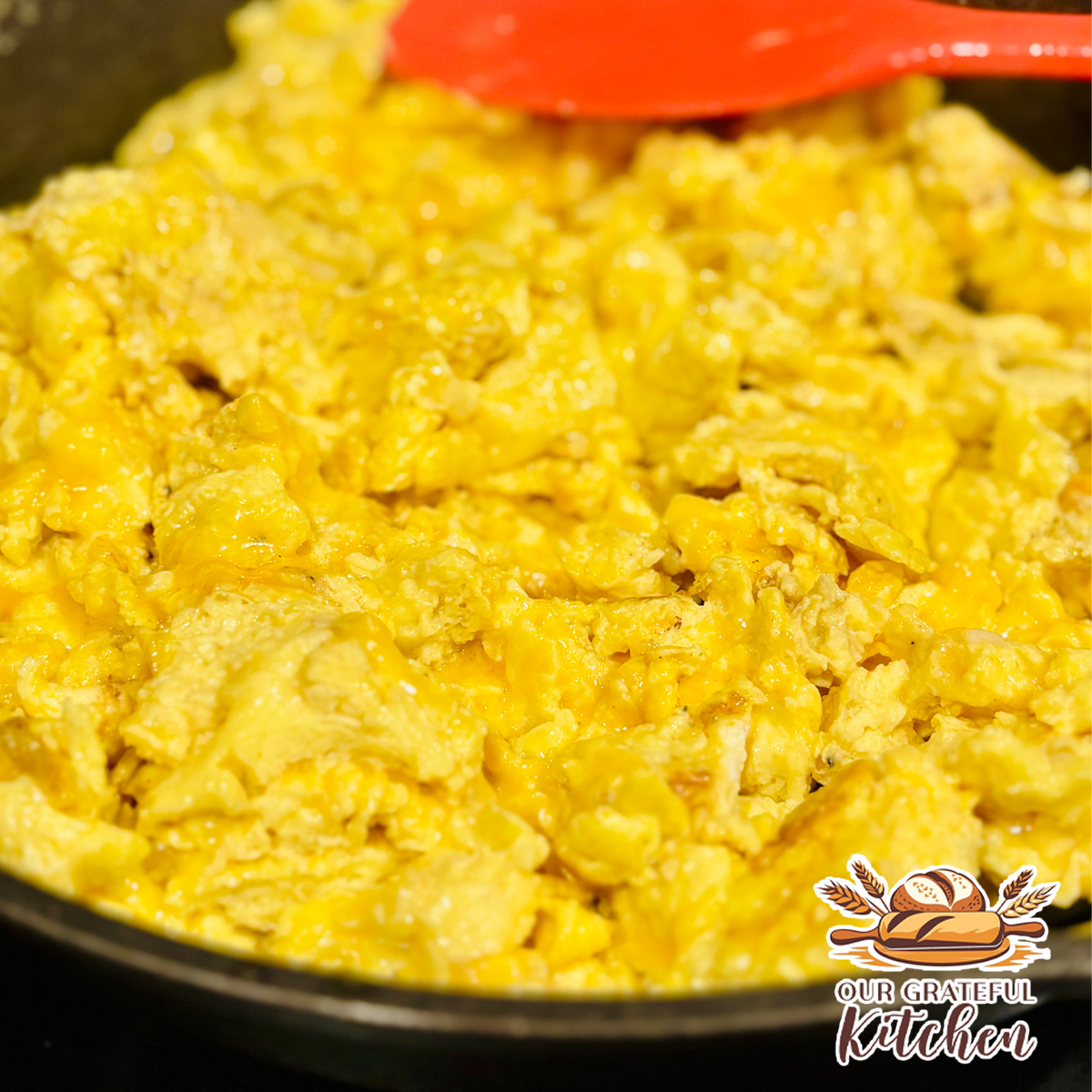
Keep working your way around the skillet this way. At first, you’ll still have quite a bit of runny egg around the cooked portions. As the eggs continue cooking, you’ll see larger, fluffy curds begin to form.

You aren’t trying to stir them constantly. Gentle pushing and folding gives the uncooked egg a chance to reach the hot skillet while keeping those larger, soft curds intact.

The cheese goes in when the eggs are mostly cooked but still look a little wet. This is also why I don’t add the cheese at the very beginning. Adding it near the end lets the cheddar melt into the eggs without needing to cook everything longer than necessary.

Gently fold the cheese into the eggs rather than stirring everything together. Once the cheese has melted throughout, take the skillet off the heat. The eggs should still look slightly moist when you do this. They’ll continue cooking from the heat already in the skillet.
Once the cheese melts, take the skillet off the heat. The eggs should still look slightly moist when you do this. They’ll continue cooking from the heat already in the skillet, so waiting until they look completely done can leave you with overcooked eggs by the time they reach the table.

This post may contain affiliate links. As an Amazon Associate, I earn from qualifying purchases.
PrintFluffy Cheesy Scrambled Eggs

These fluffy cheesy scrambled eggs are soft, buttery, and loaded with melted cheddar cheese. Cooking them slowly over medium-low heat keeps the eggs tender and fluffy for an easy breakfast the whole family can enjoy.
- Prep Time: 5 minutes
- Cook Time: 5-7 minutes
- Total Time: 10-12 minutes
- Yield: 4-6 servings
- Category: Breakfast
- Method: Stovetop
- Cuisine: American
Ingredients
- 8 large eggs
- ¼ cup whole milk
- ½ teaspoon salt
- ¼ teaspoon black pepper
- 2 tablespoons butter
- 1 cup shredded cheddar cheese
Instructions
- Whisk the eggs. Crack the eggs into a medium bowl. Add the milk, salt, and black pepper. Whisk vigorously for 30–45 seconds, until the eggs are completely combined and slightly frothy.
- Heat the skillet. Melt the butter in a large nonstick skillet over medium-low heat, swirling it around to coat the bottom of the skillet.
- Add the eggs. Pour the egg mixture into the skillet. Let it cook undisturbed for about 20–30 seconds, or until the eggs just begin to set around the edges.
- Gently scramble. Use a silicone spatula to gently push the cooked eggs from the outside edges toward the center of the skillet, allowing the uncooked egg to flow into the open spaces. Continue slowly pushing and folding the eggs as they cook.
- Add the cheese. When the eggs are mostly set but still look slightly wet, sprinkle the shredded cheddar cheese evenly over the eggs.
- Finish cooking. Gently fold the cheese into the eggs and continue cooking for about 30–60 seconds, just until the cheese is melted and the eggs are soft and fluffy.
- Remove from the heat. Take the skillet off the heat while the eggs still look slightly moist. They will continue to cook from the residual heat. Serve immediately.
Notes
- Don’t overcook the eggs. Removing them from the heat while they’re still slightly moist is one of the keys to soft, fluffy scrambled eggs.
- Keep the heat fairly low. Medium-low heat gives the eggs time to form soft, fluffy curds without browning or becoming rubbery.
- Cheese: Cheddar is the default, but Colby Jack, Monterey Jack, pepper jack, or a cheddar blend will also work.
- For extra cheesy eggs: Reserve a small handful of the cheese and sprinkle it over the finished eggs just before serving.
- Add bacon: Fold in about ½ cup cooked and crumbled bacon along with the cheese.
Recipes That Pair Well With This
These cheesy scrambled eggs can be part of a quick breakfast or a bigger weekend brunch. They’re also an easy starting point for breakfast for dinner.
- Flaky Homemade Buttermilk Biscuits – Warm homemade biscuits are one of my favorite things to serve alongside eggs, especially with a little butter or jam.
- Sausage Hash Brown Breakfast Casserole is another easy egg breakfast for the whole family, made with breakfast sausage, shredded hash browns, eggs, and plenty of cheddar cheese.
- Classic Sausage Gravy – Make biscuits and gravy alongside the eggs when you want a heartier breakfast.
- Air Fryer Sausage Links – An easy protein to cook while you’re making the eggs on the stovetop.
- How to Cook Bacon in the Air Fryer – Air frying the bacon keeps the stovetop free for your eggs and makes breakfast easier to manage.
- Fluffy Homemade Pancakes – Add a stack of pancakes for a classic family breakfast or breakfast-for-dinner spread.
- Bakery-Style Cinnamon Rolls – A sweet addition when you’re making a bigger weekend or holiday breakfast.
- One Bowl Banana Bread – Serve slices of banana bread with your eggs for an easy sweet-and-savory breakfast.
More Recipes to Try
Looking for more easy breakfast recipes? These are a few more we make at home.
- Bacon Egg and Cheese Croissant – A warm breakfast sandwich filled with bacon, egg, and cheese.
- Southwest Breakfast Burritos – These freezer-friendly breakfast burritos are great for stocking the freezer for busy mornings.
- Hotel Style Waffles – Make crisp, fluffy waffles at home for a breakfast that feels a little more special.
- Sourdough Discard Pancakes – A simple way to use sourdough discard while making breakfast.
- Easy Sourdough Discard Waffles – Another easy option when you have sourdough discard waiting to be used.
- Cinnamon Sugar French Toast Sticks – A fun breakfast that’s especially good for little hands.
- Strawberries and Cream Overnight Oats – A make-ahead breakfast option for mornings when you don’t have time to stand at the stove.
Tips for Little Helpers
Scrambled eggs are a good recipe for getting little helpers into the kitchen. Younger kids can help crack the eggs into a separate bowl, measure the milk and seasonings, or sprinkle in the shredded cheese.
Older kids can practice whisking the eggs and learn how to gently move them around the skillet. This is also a great recipe for teaching why we use lower heat for some foods instead of turning the burner up to make them cook faster.
As always, keep little hands away from the hot skillet and stovetop.
Tips for Success
Whisk the eggs really well. Give them a good whisk until the whites and yolks are completely combined and the mixture looks slightly frothy.
Keep the heat at medium-low. Scrambled eggs don’t need high heat. Cooking them more gently helps keep them soft and fluffy.
Don’t constantly stir. Slowly push and fold the eggs instead. This helps create larger, fluffier curds.
Wait to add the cheese. Let the eggs get mostly set before adding the cheddar. The cheese only needs enough time to melt.
Take them off the heat early. Your eggs will continue to cook after you remove the skillet from the burner. Pull them while they still look a little moist.
Shred your own cheese when you can. Freshly shredded cheddar usually melts more smoothly than pre-shredded cheese.
FAQs
What makes scrambled eggs fluffy?
Whisking the eggs thoroughly before cooking helps incorporate air. The cooking method matters too. Use medium-low heat and gently push and fold the eggs instead of rapidly stirring them around the skillet.
Should I add milk to scrambled eggs?
For this recipe, yes. A little whole milk gives the eggs a softer texture without making them watery. You don’t need very much.
Can I use half-and-half instead of whole milk?
Yes. Half-and-half will make the scrambled eggs a little richer and creamier. You can substitute it for the whole milk.
When should I add cheese to scrambled eggs?
Add the cheese when the eggs are mostly set but still slightly wet. This gives the cheese plenty of time to melt without forcing you to overcook the eggs.
What is the best cheese for scrambled eggs?
Cheddar is my first choice because it melts well and gives the eggs plenty of cheesy flavor. Colby Jack, Monterey Jack, pepper jack, or a cheddar blend will also work.
Why are my scrambled eggs rubbery?
The most common causes are cooking them over heat that’s too high or leaving them in the skillet too long. Keep your burner around medium-low and remove the eggs while they’re still slightly moist.
Can I make these scrambled eggs without milk?
Yes. You can leave the milk out. The finished texture will be slightly different, but the eggs will still work.
Storage
Scrambled eggs taste best right after cooking, but you can save leftovers. Let them cool, then transfer them to an airtight container and refrigerate them promptly.
Store leftover scrambled eggs in the refrigerator for up to 3–4 days. Reheat them gently in the microwave in short intervals. Avoid overheating them, since that can make the eggs rubbery.
Freezing Instructions
You can freeze cooked scrambled eggs, although their texture is best when they’re freshly made.
Let the eggs cool completely before transferring them to a freezer-safe container or bag. Freeze them in individual portions if you want an easy grab-and-reheat breakfast.
Thaw overnight in the refrigerator, then gently reheat until warmed through. For the best texture, I would make these fresh whenever possible.
Variations
Bacon Cheesy Scrambled Eggs: Fold cooked, crumbled bacon into the eggs when you add the cheese. My How to Cook Bacon in the Air Fryer tutorial is an easy way to get the bacon ready without using another skillet.

Pepper Jack Scrambled Eggs: Swap some or all of the cheddar for pepper jack to add a little heat.
Extra Cheesy Eggs: Save a small handful of the shredded cheddar and sprinkle it over the eggs right before serving.
Different Cheese: Try Colby Jack, Monterey Jack, or a cheddar blend in place of the cheddar.
Breakfast Burrito Eggs: Use the finished eggs as a filling for breakfast burritos with bacon or sausage, potatoes, and your favorite toppings. For another freezer-friendly option, try my Southwest Breakfast Burritos.
Final Thoughts
Fluffy cheesy scrambled eggs don’t need a long ingredient list or any complicated tricks. The biggest difference comes down to how you cook them.
Whisk the eggs well, keep the heat down, and don’t rush them. Add the cheese near the end and pull the skillet from the heat before the eggs become dry.
And with plenty of cheddar melted throughout, these definitely earn the name cheesy scrambled eggs.
Leave a Reply