
This post may contain affiliate links. As an Amazon Associate, I earn from qualifying purchases.
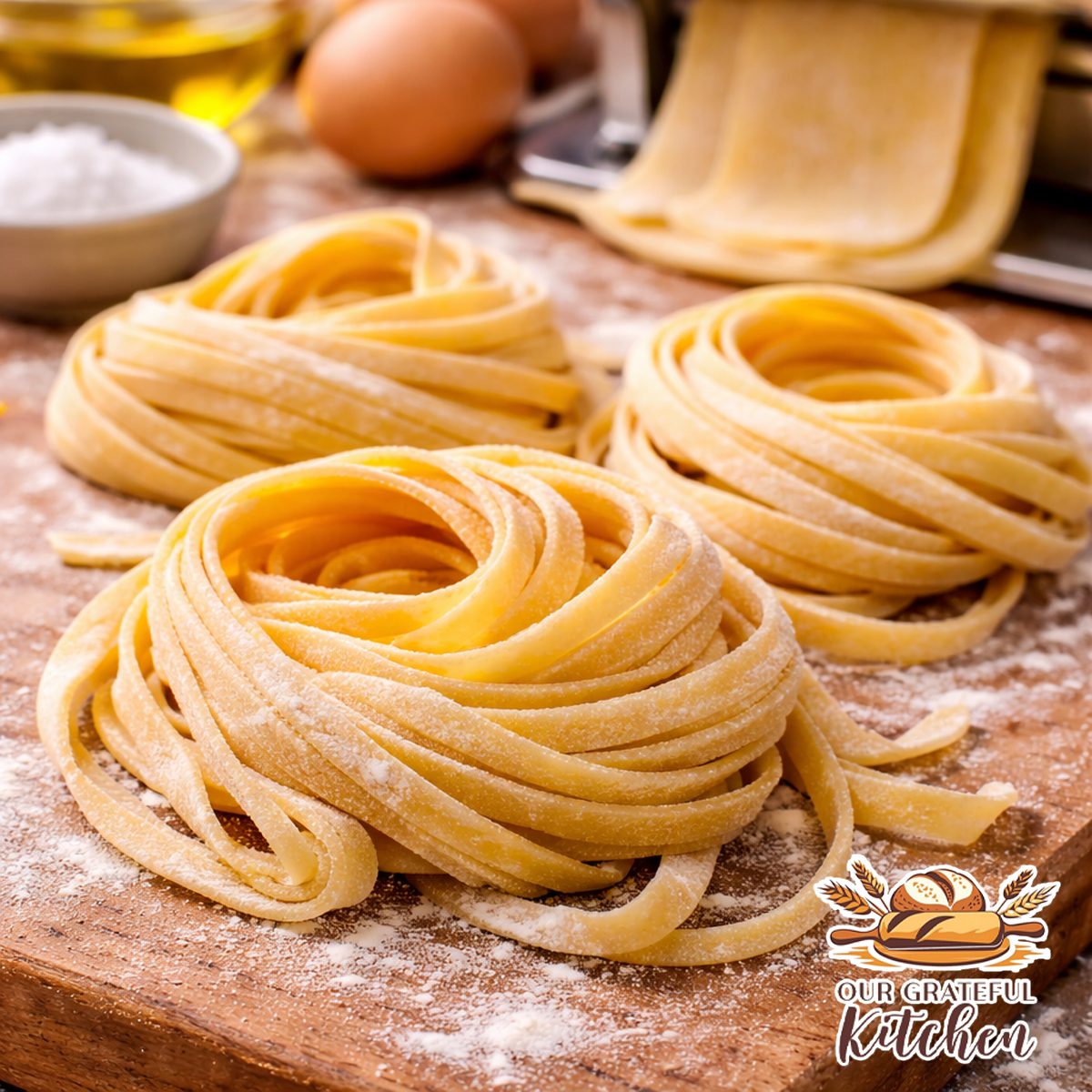
There is something deeply satisfying about making fresh pasta from scratch. What begins as a simple mixture of flour and eggs quickly transforms into silky sheets and tender noodles that rival anything you’d find at a restaurant.
While homemade pasta may sound intimidating, it’s surprisingly approachable — and once you try it, you may never look at boxed pasta the same way again. The texture is softer, the flavor is richer, and the entire experience feels intentional.
Fresh pasta is also incredibly versatile. Toss it with homemade marinara, or garlic butter for a simple dinner, pair it with Homemade Alfredo, turn it into something more indulgent like Cajun chicken pasta, or serve it alongside one of our Easy Dinners when you want a meal that feels elevated without being complicated.
If you’re planning a cozy pasta night, don’t forget to browse our Bread Recipes — nothing completes a pasta dinner quite like warm homemade bread.
Why You’ll Love This Recipe
- Restaurant-quality results at home
- Made with just a few pantry staples
- Softer, more tender than dried pasta
- Perfect for beginners
- Pairs beautifully with countless sauces
Ingredients You’ll Need
- All-purpose flour
- Large eggs
- Olive oil
- Salt
- Water (only if needed)

Equipment Needed
- Large clean work surface — Gives you room to properly mix and knead the dough.
- Fork — Helps incorporate the eggs gradually.
- Bench scraper (optional) — Useful for handling sticky dough.
- Plastic wrap — Prevents the dough from drying while it rests.
- Pasta Roller or Rolling pin — Either works, though a machine creates more uniform thickness, and saves a lot of time!
- Knife or pasta cutter — For shaping noodles.
How to Make Homemade Fresh Pasta
Great pasta starts with proper dough development. Mixing the eggs directly into a flour well allows you to control hydration while keeping the dough structured rather than sticky.

Kneading is where the transformation happens. As the dough is pressed and folded, gluten develops — creating the elasticity needed for pasta that stretches thin without tearing. At first, the dough may feel slightly dry, but patience during kneading typically brings it together into a smooth, cohesive ball.

Resting the dough is just as important as kneading. This pause relaxes the gluten, making the dough far easier to roll while also improving the final texture.

When rolling, start thick and gradually move thinner with each pass.

Folding the dough early in the process helps create a more uniform sheet and contributes to that signature silky bite fresh pasta is known for.
Aim for sheets that are thin yet sturdy enough to hold sauce. Once cut, lightly flour the noodles to prevent sticking and cook them promptly for the best flavor.

🎥 Watch the Process
There is something incredibly satisfying about watching pasta dough transform into silky, fresh noodles. Using a pasta attachment makes the process faster and more consistent, helping you achieve thin, even sheets that cook beautifully.
Start by folding the dough before each pass through the roller — this strengthens the structure and creates that signature smooth texture. Gradually reduce the thickness setting until the pasta is delicate but still sturdy enough to hold sauce.
Once cut, lightly dust the noodles with flour to prevent sticking and cook them right away for the best flavor and texture.
👉 If you’ve never made pasta at home before, don’t be intimidated — after one batch, it quickly becomes second nature.
This post may contain affiliate links. As an Amazon Associate, I earn from qualifying purchases.
PrintHomemade Fresh Pasta

This homemade fresh pasta dough is tender, silky, and surprisingly easy to make with just a handful of pantry staples. Whether rolled by hand or with a pasta machine, it creates restaurant-quality noodles perfect for pairing with your favorite sauces. This recipe doubles (or triples) easily!
- Prep Time: 30 minutes
- Rest Time: 30 minutes
- Cook Time: 2-3 minutes
- Total Time: About 1 hour
- Yield: 3-4 servings
- Category: Dinner, Pasta
- Cuisine: Italian, Italian-Inspired
Ingredients
- 2 cups all-purpose flour
- 3 large eggs
- 1/2 tsp salt
- 1 TBSP olive oil
- 1–2 tsp water (only if needed)
Instructions
- Pour the flour onto a clean countertop and create a wide well in the center.
- Crack the eggs into the well, then add the olive oil and salt.
- Using a fork, slowly whisk the eggs while gradually pulling in flour from the edges until a shaggy dough forms.
- Begin kneading with your hands, pressing and folding the dough until it becomes smooth and elastic, about 8–10 minutes.
- If the dough feels overly dry, dampen your hands lightly to introduce a small amount of moisture. If it sticks heavily, dust with flour sparingly.
- Shape into a ball, wrap tightly in plastic wrap, and allow it to rest at room temperature for at least 30 minutes. This relaxes the gluten and makes rolling much easier.
- Divide the dough into four pieces.
- Roll each portion thin using a rolling pin or pasta machine until it reaches your desired thickness.
- (See video in the post for a visual how-to)
- If using a pasta rolling machine, start on a wide setting and gradually work your way to a thinner setting. (For fettuccini you might go to a 6 or 7, for spaghetti, you may stay at a 3-4)
- Cut into noodles or shape as desired.
- Cook fresh pasta in heavily salted boiling water for 2–3 minutes, then drain and serve immediately.
Notes
Proper kneading is the secret to silky pasta — don’t rush this step.
Resting the dough is non-negotiable; it dramatically improves texture.
Fresh pasta cooks much faster than dried pasta, so watch it closely.
Lightly flour cut noodles to prevent sticking before cooking.
Tips for Success
- Knead until the dough is smooth and elastic, not rough.
- Always allow the dough to rest — skipping this leads to tough pasta.
- Flour lightly while rolling to prevent sticking without drying the dough.
- Remember that fresh pasta cooks quickly, often in just a few minutes.
- If the dough springs back while rolling, let it rest another 10 minutes.
Storage & Reheating
Store: Wrap the dough tightly and refrigerate for up to 24 hours.
Freeze: Cut pasta can be frozen in nests for up to 2 months.
Cook: Fresh pasta cooks quickly in salted boiling water. Frozen pasta can go straight into the pot — just add an extra minute.
Frequently Asked Questions
Is homemade pasta difficult to make?
Not at all. It may feel unfamiliar the first time, but the process is straightforward and quickly becomes second nature.
Do I need a pasta machine?
No — a rolling pin works just fine. A pasta machine simply makes the process faster and helps create even thickness.
Why does pasta dough need to rest?
Resting relaxes the gluten so the dough rolls more easily and results in a more tender texture.
How thin should pasta be?
Thin enough to slightly see your hand through it, but not so thin that it tears when lifted.
Variations & Serving Ideas
- Toss with garlic butter or homemade marinara for a simple, comforting meal.
- Pair with creamy alfredo for classic richness.
- Spice it up with our Cajun Chicken Pasta
- Finish with olive oil, Parmesan, and cracked pepper for minimalist flavor.
- Add sautéed vegetables or Juicy Garlic Herb chicken for a complete dinner.
Final Thoughts
Making fresh pasta is one of those kitchen skills that feels far more complicated than it actually is. With a little practice, it becomes less of a project and more of a rhythm — one that turns an ordinary dinner into something memorable.
Once you experience the texture and flavor of pasta made from scratch, it’s hard to go back.
And the best part? You created it with your own hands.

Leave a Reply